Types of Fish in Panama City Beach: A Guide for Visiting Anglers


 Published: Nov 26, 2026
 7 min read
Summary
A species-by-species look at the fish Capt. John Carver of Combat Fishing targets off Panama City Beach, from Amberjack and Red Snapper to grouper, Cobia and Mahi Mahi. Written for first-time visiting anglers.
The rod doubles over before you have finished adjusting your grip, and the line starts peeling off the reel. Somewhere below the boat, something heavy has decided it does not want to come up. That moment is why so many people book a charter off Panama City Beach, and it is also why it helps to know what might be on the other end of the line.
Why the Species List Matters Here
Panama City Beach has a deep species list, and Capt. John Carver of Combat Fishing names a good share of it when he describes his trips. Amberjack, Cobia, Mahi Mahi, several groupers, King Mackerel, Red Snapper, Vermilion Snapper and Gray Triggerfish all show up in the fishing he offers. Knowing a little about each one makes the day more fun, because you understand what you are looking at when it hits the deck.
The fish also split into two broad groups by how you catch them. Some are found down near structure and bottom, where you drop bait and wait for a bite. Others swim higher in the water and are better matched to trolling, where the boat keeps moving and the lines trail behind it. Combat Fishing works both styles, so it is worth keeping that split in mind as you read.
Reef and Bottom Fish
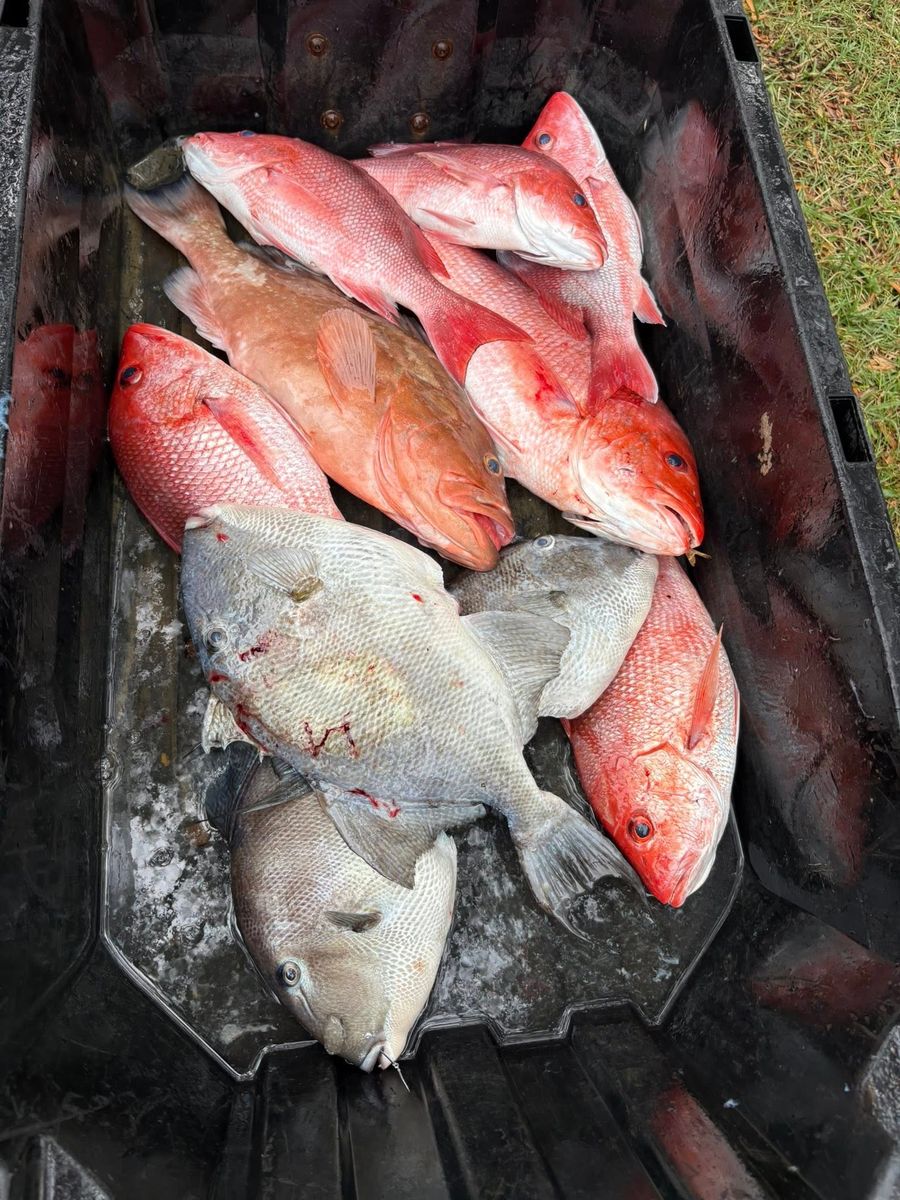
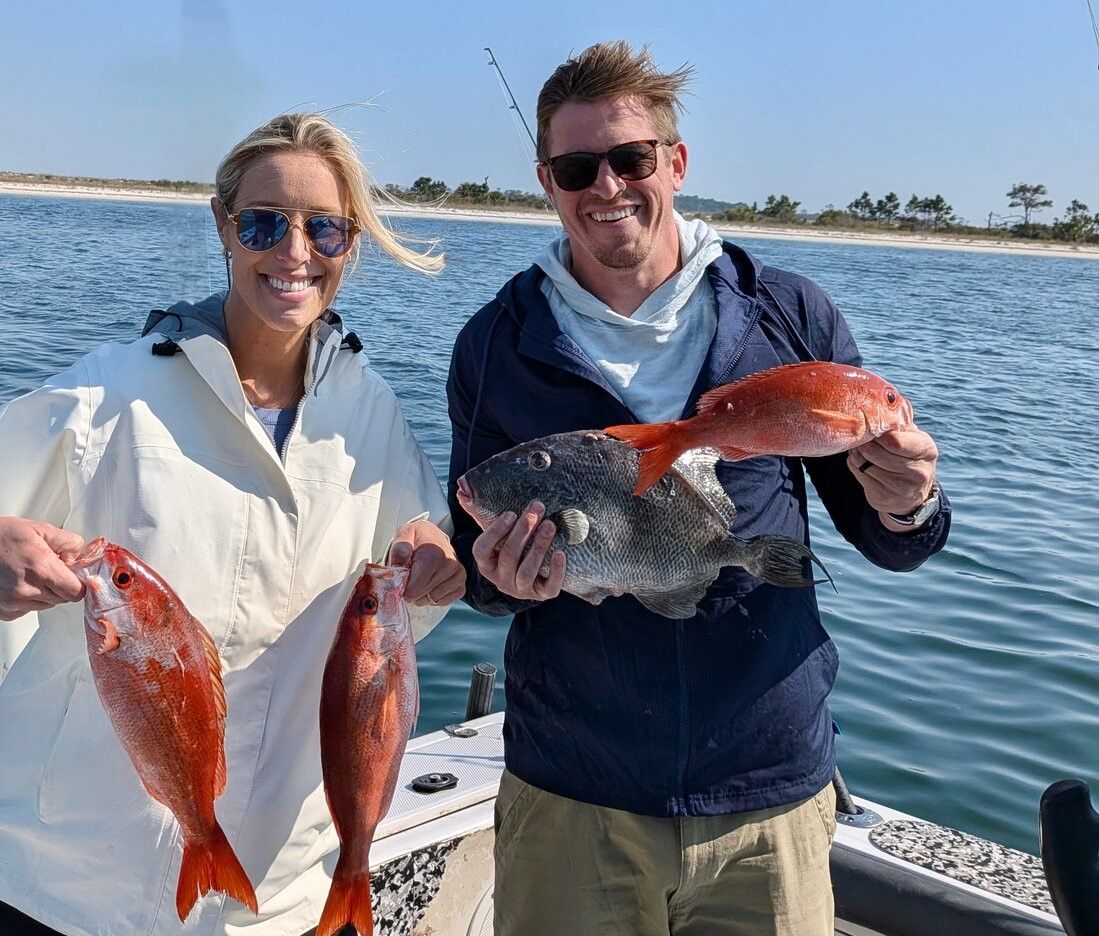
Red Snapper is probably the name most visitors already know. It is easy to recognize by its reddish color and its sharp profile, and it is one of the species people ask about first when they search for fishing around Panama City Beach. Vermilion Snapper is a smaller relative, with a similar red tone, and it often turns up alongside its bigger cousin when you are fishing the bottom.
Then there are the groupers. Combat Fishing's profile lists Gag Grouper, Red Grouper, Scamp Grouper and Snowy Grouper, which gives you four different fish under one heading. Groupers are heavy-bodied, wide-mouthed fish that live close to the bottom, and they are known for powerful runs that test your arms and your drag. Telling them apart takes a little practice, so having a captain beside you who handles them regularly is a real advantage on your first trip.

Gray Triggerfish rounds out this group. It has a flat, oval body and a small mouth built for picking at structure. It does not look like a snapper or a grouper at all, which makes it one of the easier fish for a beginner to identify once someone points it out.
Fast Fish for the Trolling Spread
Amberjack deserves its own mention, since it is one of the species the charter descriptions call out by name alongside snapper and grouper. It is a strong, streamlined fish, and anglers tend to talk about the fight more than the looks. Expect it to pull hard and keep pulling.
King Mackerel, also called Kingfish, is built for speed. It has a long, slim body and a mouth full of teeth, and it hits moving baits with a burst of energy. Mahi Mahi is the showpiece of the group, with bright, vivid color that fades quickly once it is out of the water. Cobia is a different animal again, a long, dark, powerful fish that many anglers count as a prize catch.
Bull Shark also appears on the list of what swims in these waters. You are not likely to plan a day around one, but it is a reminder that the Gulf is a working ecosystem with predators at the top of it.
How the Species Fit the Fishing Combat Fishing Offers
Capt. John's trips are built around trolling and bottom fishing, and the species line up with those methods in a straightforward way. When the boat is anchored or drifting over structure, you are working for the snapper, the grouper and the triggerfish. When the boat is moving and the lines are out behind it, that is where the faster fish come into play.
Several of the listed trips also frame the day around learning. One is aimed at sharpening your trolling and bottom fishing skills, and another is pitched to families who want to fish together for snapper, grouper and Amberjack. If you are new to the Gulf, either of those is a sensible starting point, since you get time with the captain and the chance to see how each species behaves.
Getting Ready Before You Go
A few simple habits will help you get more from the day:
- Learn the shape and color of two or three target species before you arrive, so the names mean something on the boat.
- Ask Capt. John for the current Panama City Beach fishing report. He invites guests to do exactly that, and it tells you what has been biting lately.
- Think about whether you want a bottom fishing day, a trolling day, or a mix, and say so when you book.
Fish move and conditions change, so treat any species list as a guide to what lives here rather than a promise of what you will land. That honesty is part of what keeps fishing interesting. A captain who knows the water can steer you toward the best chance on the day you go.
Planning Your First Trip
Once you know the cast of characters, the rest comes naturally. Red Snapper and its smaller cousin the Vermilion, the groupers, the Gray Triggerfish, Amberjack, Cobia, King Mackerel and Mahi Mahi make up a lineup that gives first-timers plenty to look forward to. Each one looks different and fights differently, and together they explain why Gulf fishing from Panama City Beach draws visitors back.
If you want to see them for yourself, Combat Fishing runs trolling and bottom fishing trips out of Panama City Beach. Reach out to Capt. John Carver, tell him what kind of day you have in mind, and ask what is biting. The fish are out there waiting.
